Net-Zero Housing and Low-Carbon Neighbourhoods: How Masterplanning Makes a Difference.
The UK has a commitment to reach net-zero by 2050, meaning the greenhouse gases released would be the same as the emissions removed by the atmosphere. In 2022, however, a High Court judgment found the strategy to be unlawful under the Climate Change Act 2008, ruling that the government must provide greater detail on how it intends to meet its carbon budgets and achieve net zero.
Housing developments play a crucial role in reducing emissions and creating resilient, liveable communities. While energy-efficient buildings are essential, the carbon impact of a neighbourhood is determined just as much by how it is planned and designed at the wider scale.
Why Masterplanning Matters
Masterplanning allows developers and planners to address carbon at the neighbourhood scale, rather than just at the level of individual buildings. By integrating homes with streets, green infrastructure, and renewable energy systems from the outset, masterplans can:
Reduce energy demand through building orientation, passive design, and street layout
Minimise transport emissions by creating walkable streets, cycle networks, and easy access to public transport
Support shared and renewable energy infrastructure to serve multiple homes efficiently
At UDB, we approach this aspects of masterplanning with a focus on both carbon reduction and quality of life, ensuring that low-carbon neighbourhoods are sustainable, resilient, and enjoyable to live in.
Green Infrastructure and Biodiversity
Landscape and ecology play a critical role in reducing carbon and improving neighbourhood performance. Well-designed green infrastructure can:
Cool streets and shade homes, reducing energy demand
Integrate green roofs, walls, and sustainable drainage systems to manage rainwater and reduce flooding
Connect habitats through biodiversity corridors, supporting wildlife and sequestering carbon
This approach ensures that landscape is more than decorative, it is a carbon-smart, functional part of the neighbourhood.
Future Homes Standard and Zero-Carbon Ready Homes
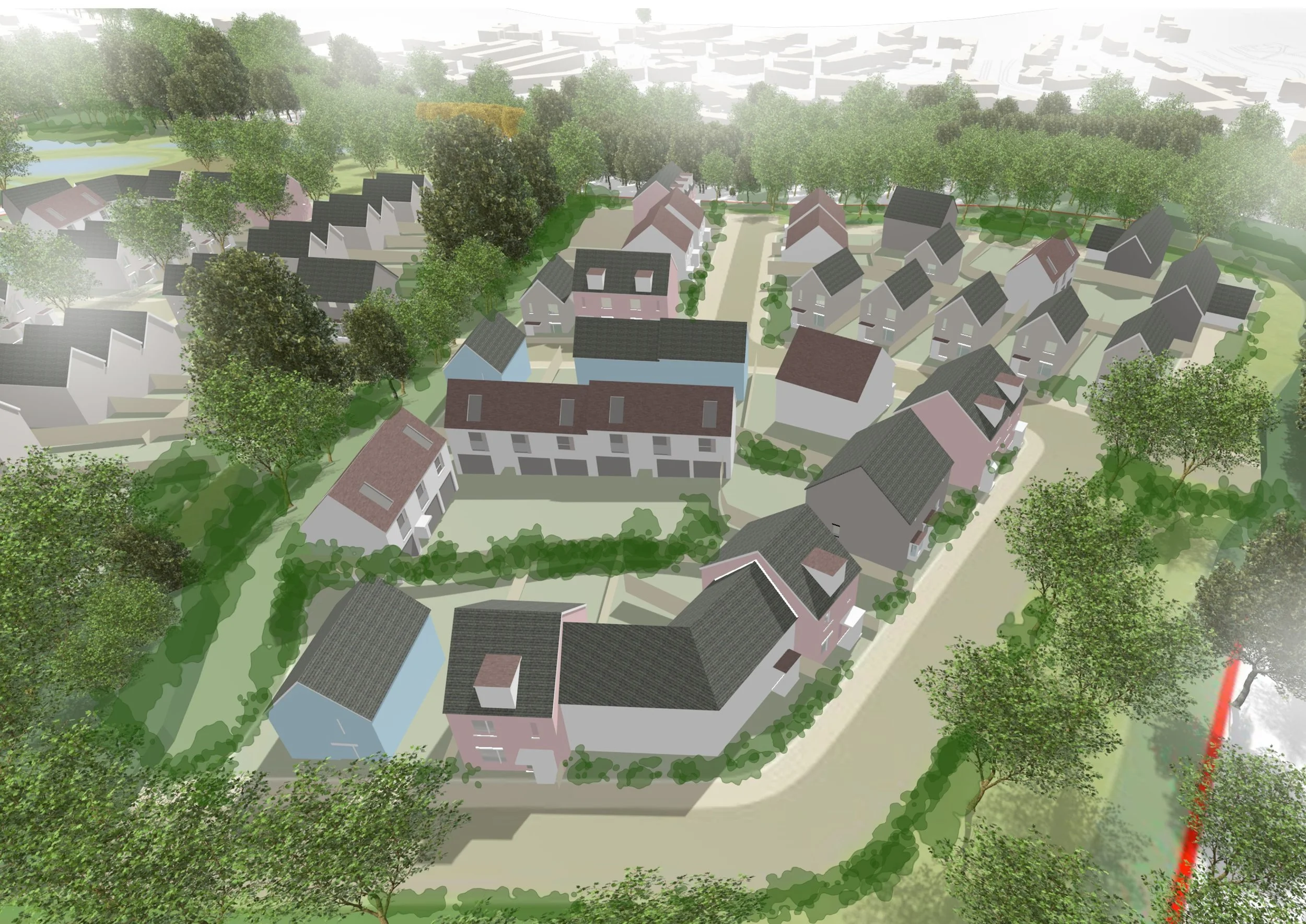
The Future Homes Standard (FHS), requires new homes to produce at least 75% lower CO₂ emissions compared to 2013 standards. These “zero-carbon ready” homes combine high energy efficiency with low-carbon heating systems such as heat pumps, ensuring they are future-proofed as the national energy grid continues to decarbonise.
At the masterplanning level, this standard can be supported through thoughtful design: building orientation, neighbourhood layout, and integrated renewable energy systems all contribute to maximising performance and achieving net-zero targets at the scale of a development, rather than just individual plots.
UK Policy Context: From Targets to Place-Based Delivery
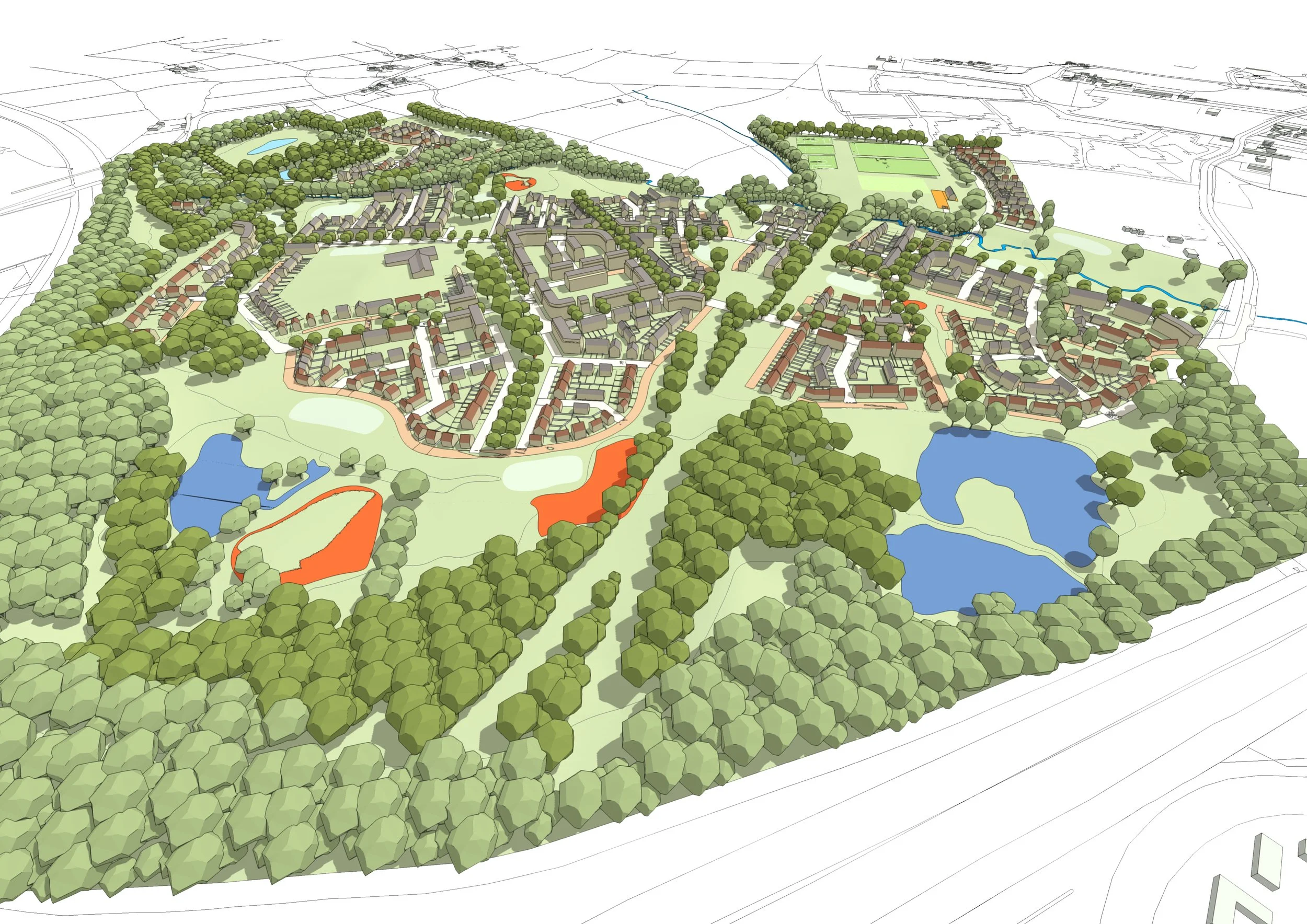
UK policy is increasingly focused on delivering net-zero housing at scale, with ambitions for 1.5 million new homes by 2029. While national targets provide direction, the real challenge is translating these ambitions into well-designed, deliverable places.
Policies like the FHS, tighter building regulations, and guidance from Homes England emphasise integrated masterplanning, where energy, transport, and landscape are considered together. Large-scale developments and new settlements are positioned as exemplars of low-carbon living, demonstrating how all-electric energy strategies, walkable layouts, and green infrastructure can combine to create truly sustainable neighbourhoods.
At UDB, we see masterplanning as the bridge between policy and delivery, ensuring that developments are not only compliant, but coherent, resilient, and future-ready.
Putting Principles into Practice: Penzance
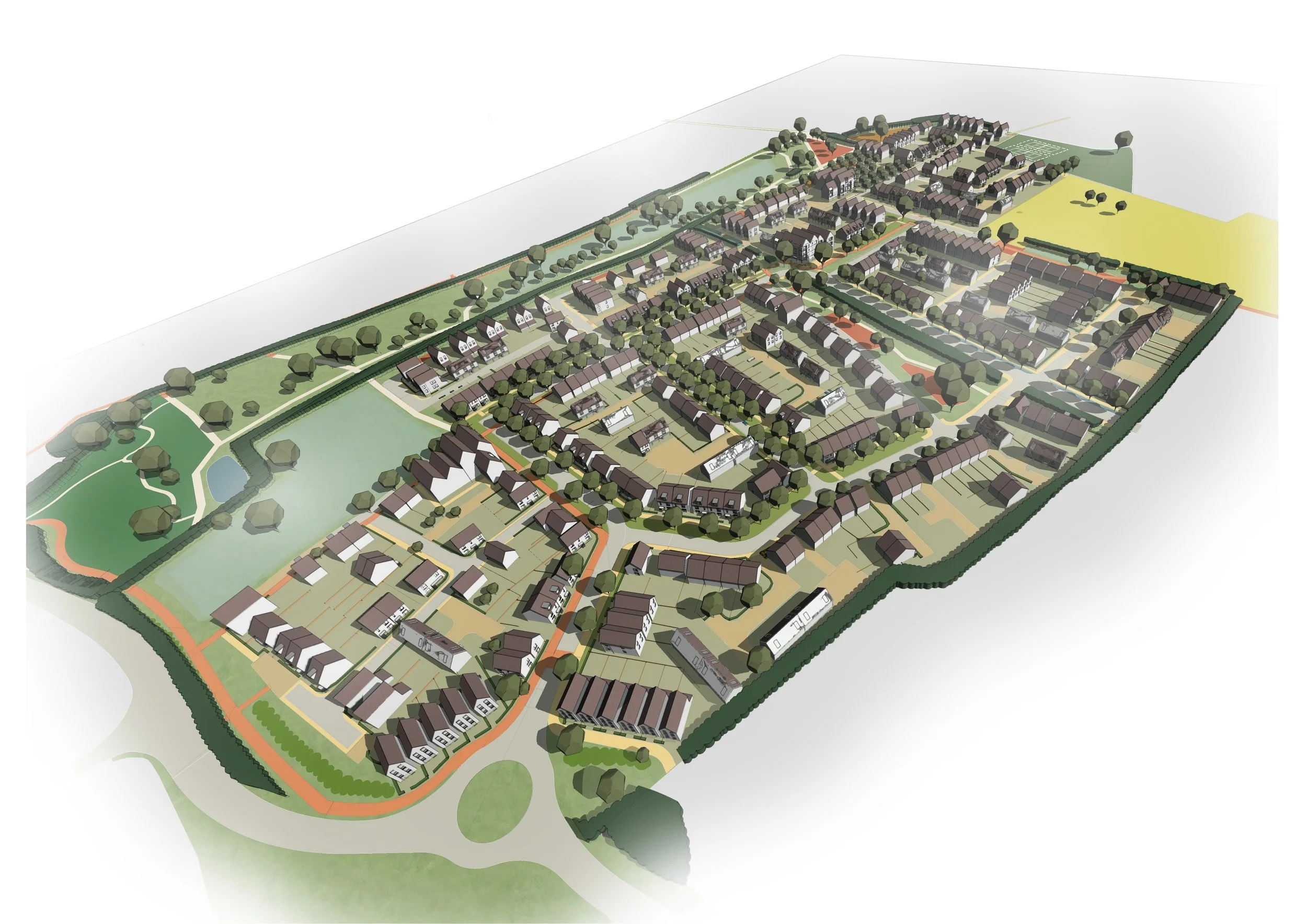
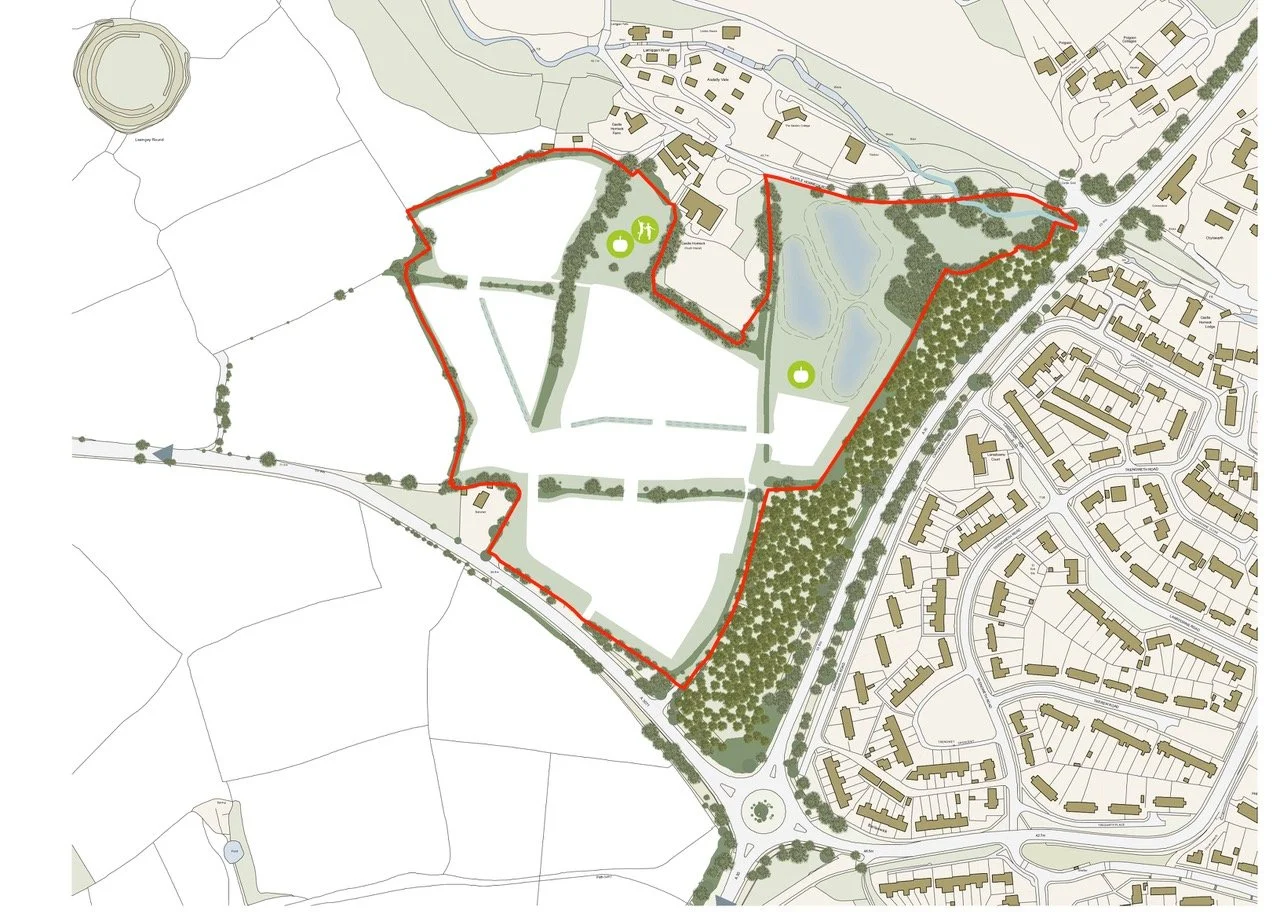
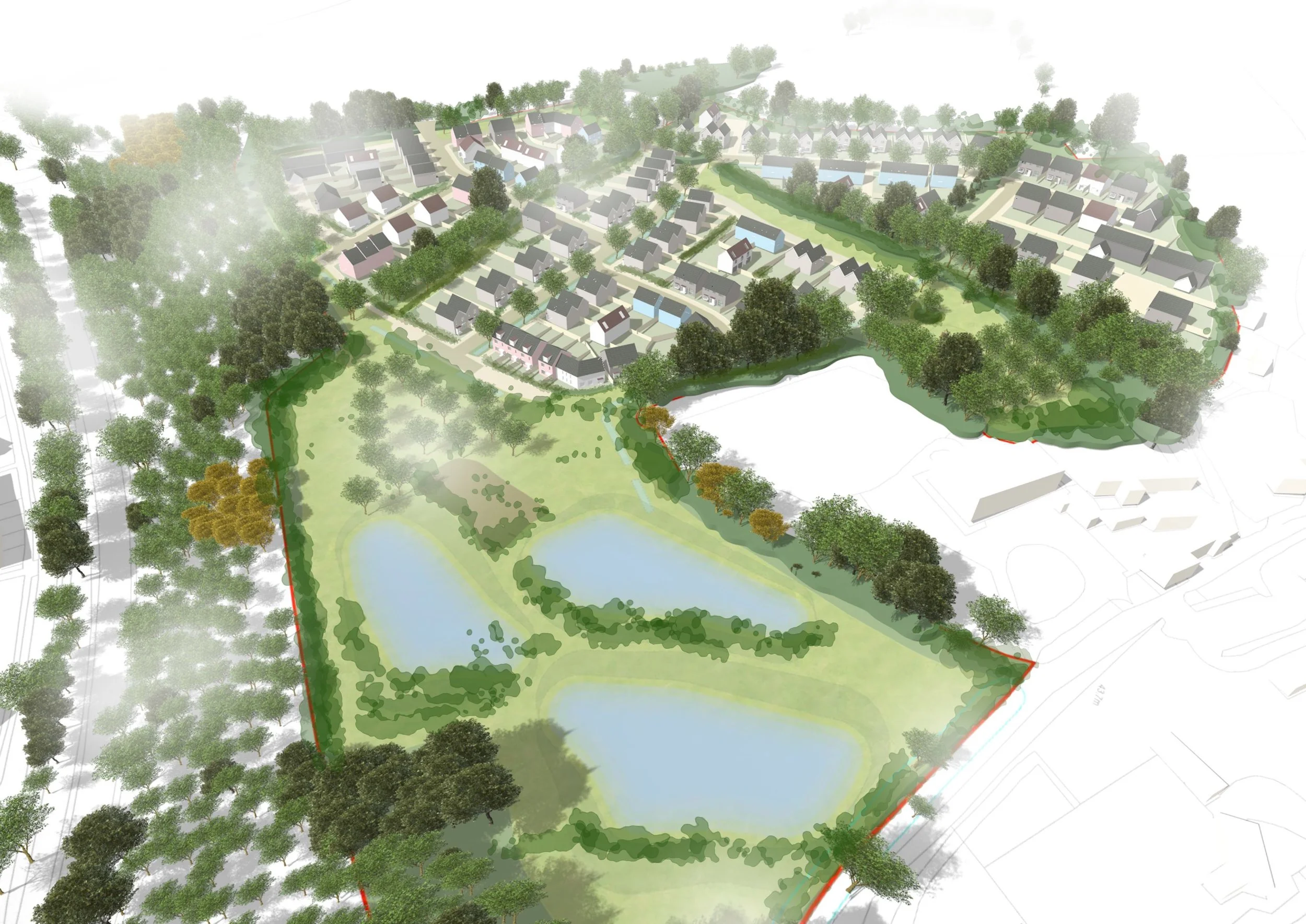
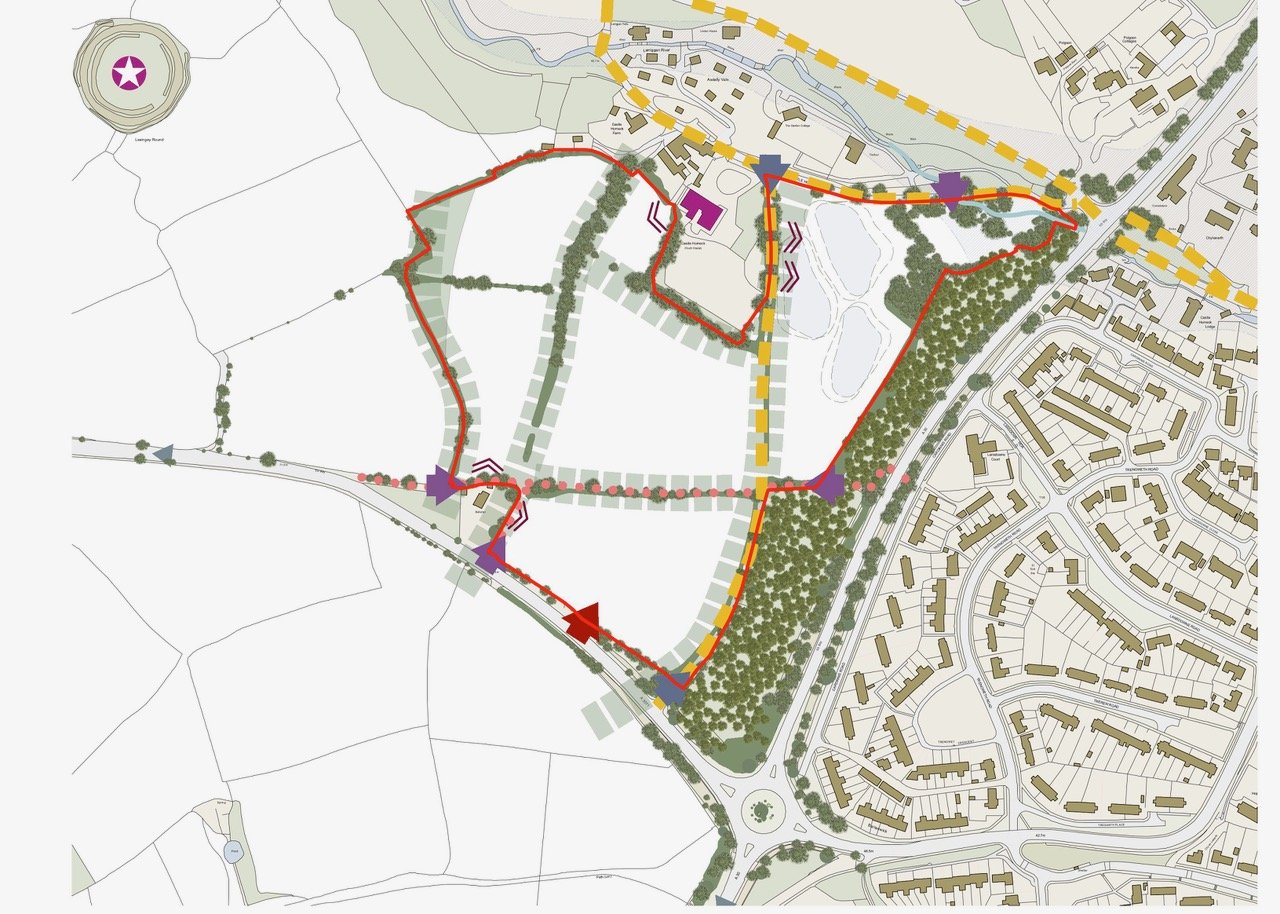
A recent highlight for UDB is the approval of our low-carbon residential masterplan in Penzance, putting these principles into practice. The project demonstrates how evidence-led design, integrated landscape strategies, and thoughtful neighbourhood planning can create communities that are sustainable, low-carbon, and liveable, delivering both policy objectives and real benefits for residents.
Looking Ahead
Achieving net-zero housing requires more than individual building standards, it demands neighbourhood-scale thinking, integration of green and energy infrastructure, and a clear focus on place-making. Masterplanning ensures that new developments perform efficiently, support residents, and respond to environmental challenges, making low-carbon living practical and desirable.
At UDB, we continue to explore and apply these principles across projects, helping landowners, developers, and local authorities create net-zero neighbourhoods that are resilient, sustainable, and designed for the future.